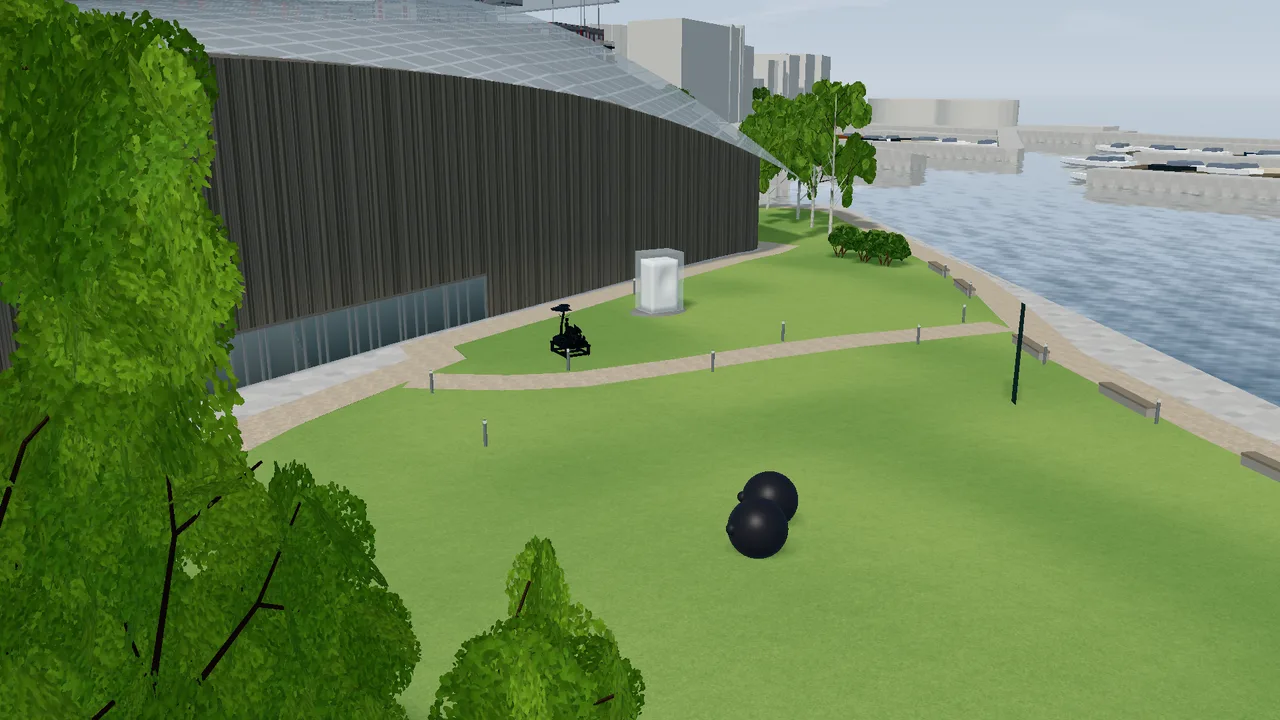
Tjuvholmen Sculpture Park
Contemporary art by the fjord, with works by Louise Bourgeois, Anish Kapoor, Paul McCarthy and Franz West.
Astrup Fearnley Museet stands at the far end of Tjuvholmen, under sail-shaped glass roofs designed by Renzo Piano. See the museum and the canal in 3D, from sea and air.
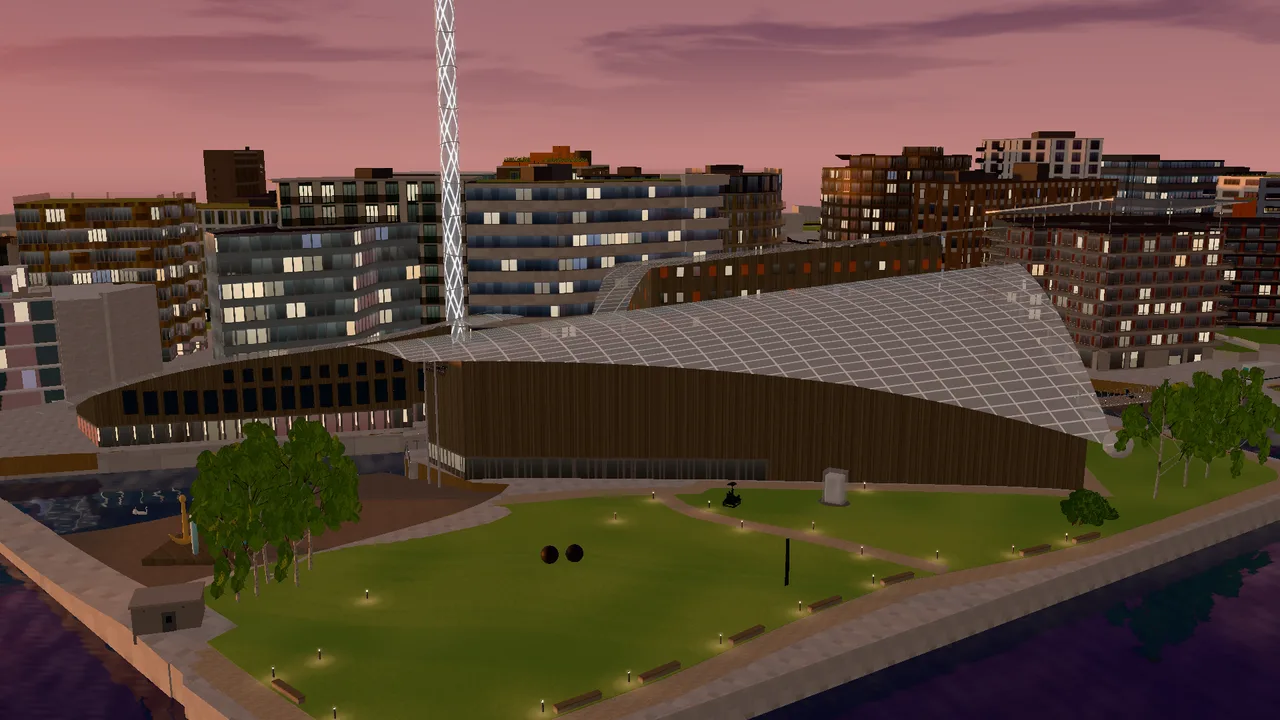
The sail roofs are the first thing you notice. The long glass roofs rise towards the canal and slope down towards the park and the sea. From the water they look like two white wings.
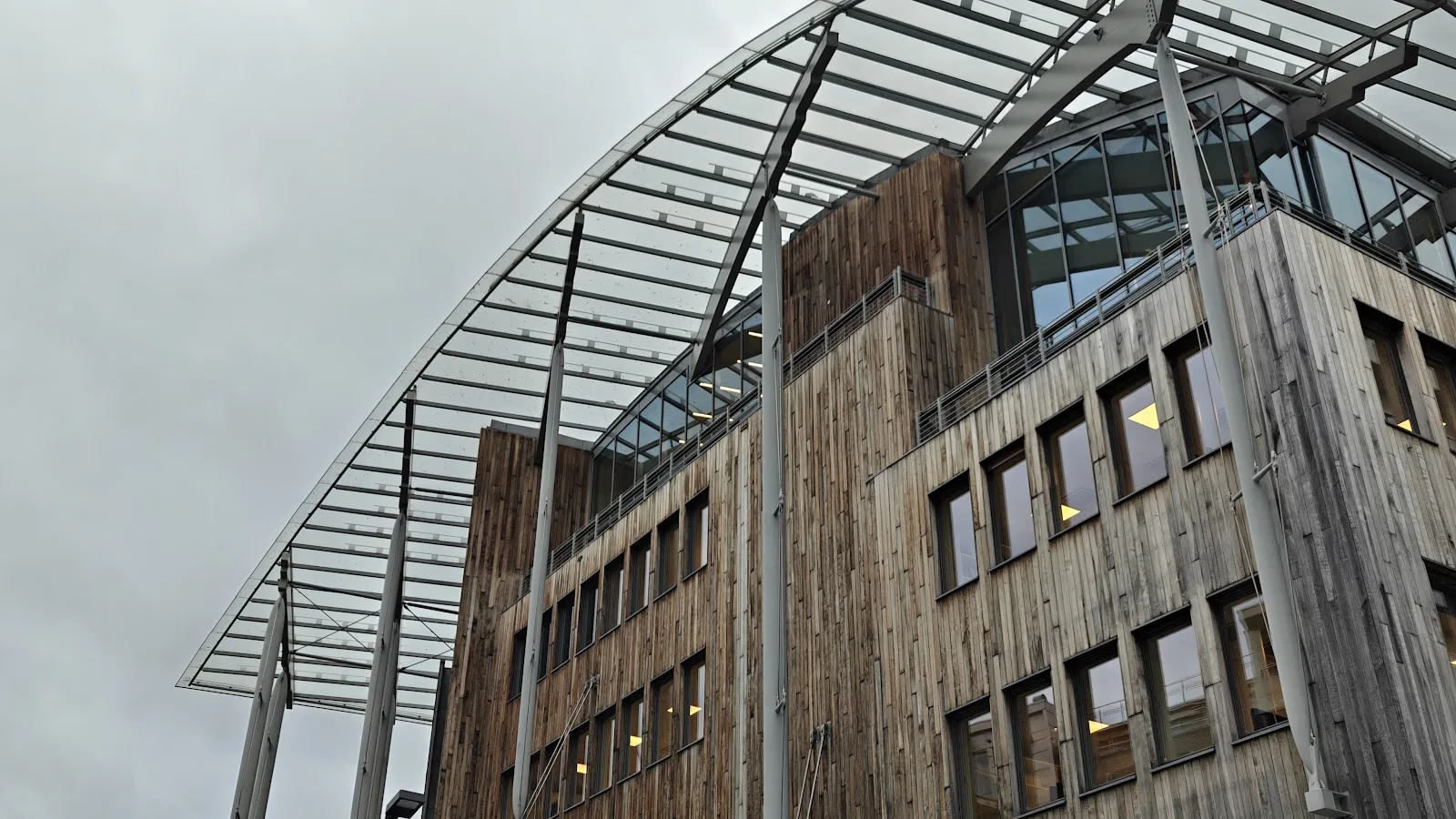
Beneath the roofs, the walls are clad in grey and brown timber, with thin, pale steel columns in front. A canal cuts through the complex, and a footbridge links the two buildings. Around the museum lie the sculpture park, the beach and the sea bath.
See the museum in evening light from the sea, or from above, where you can see how the roofs cover both buildings and the canal between them. At night the windows glow, and the roofs are reflected in the water.
The museum was designed by Renzo Piano Building Workshop in collaboration with Narud Stokke Wiig. Piano drew inspiration from the sailing boats in the harbour. The roof curves like a sail, and the beams are reminiscent of masts and rigging.
Queen Sonja opened the museum on 27 September 2012, and on 29 September it opened to the public. The museum moved here from Dronningens gate, where it had been based for 18 years.
The complex consists of two buildings. One shows works from the collection, the other changing exhibitions. The footbridge between them offers views of the surroundings, and a roof terrace looks out over the harbour and Oslo City Hall.
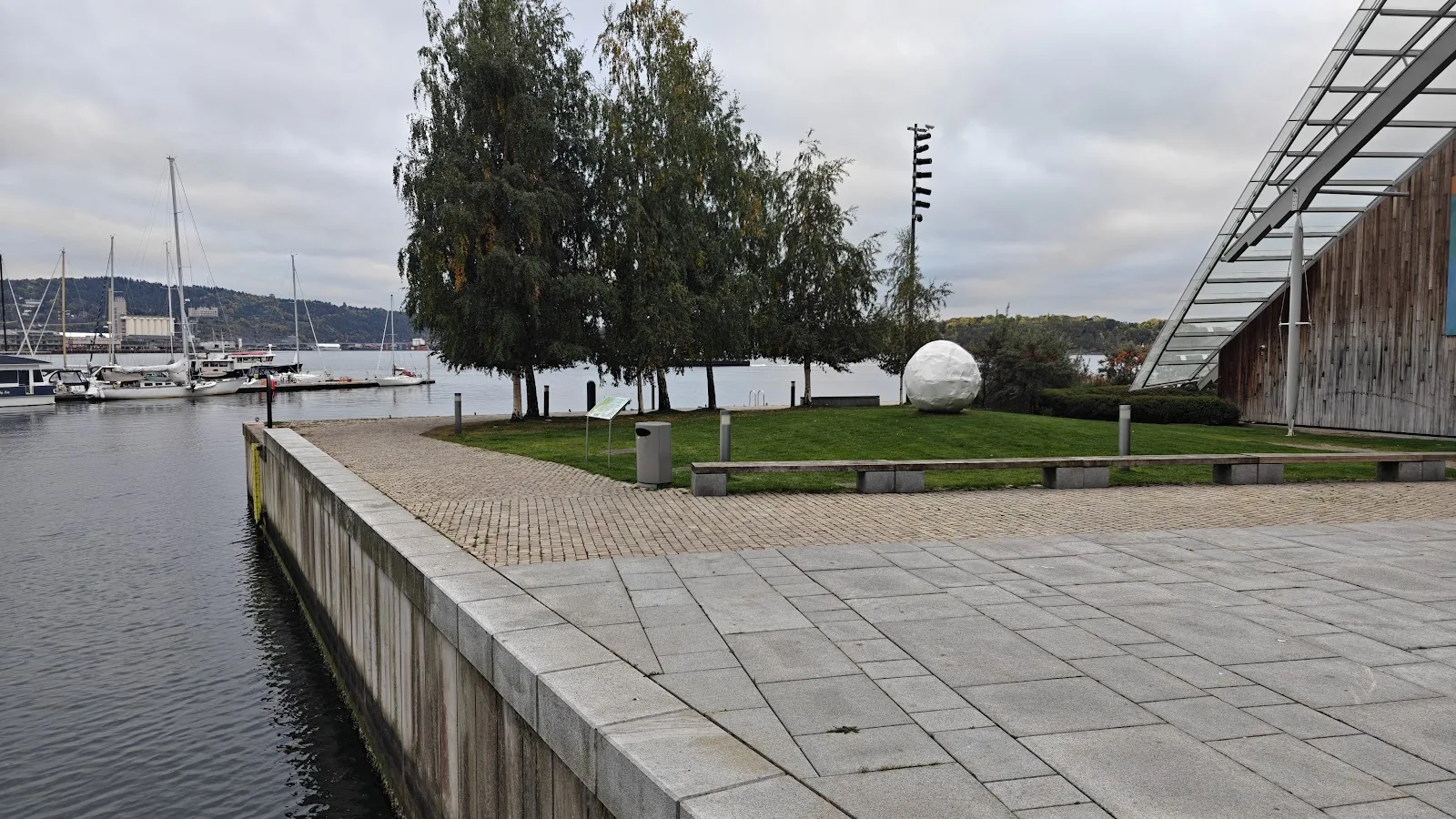
The museum charges admission. The outdoor areas around the museum are free, and that is where many of the artworks in the sculpture park stand.
The address is Strandpromenaden 2, 0252 Oslo, at the far end of Tjuvholmen. From Aker Brygge, walk along the harbour out towards the fjord. The nearest tram stop is Aker brygge by Rådhusplassen, 600–700 metres away. Opening hours and tickets are on the museum's website, afmuseet.no.
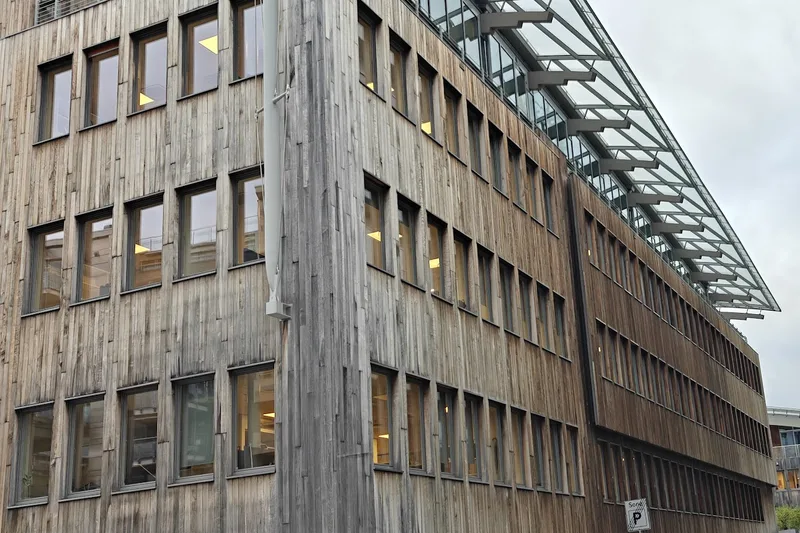
| Opened | 29 September 2012 |
| Architect | Renzo Piano Building Workshop with Narud Stokke Wiig |
| Buildings | Two, connected by a footbridge |
| Address | Strandpromenaden 2 |
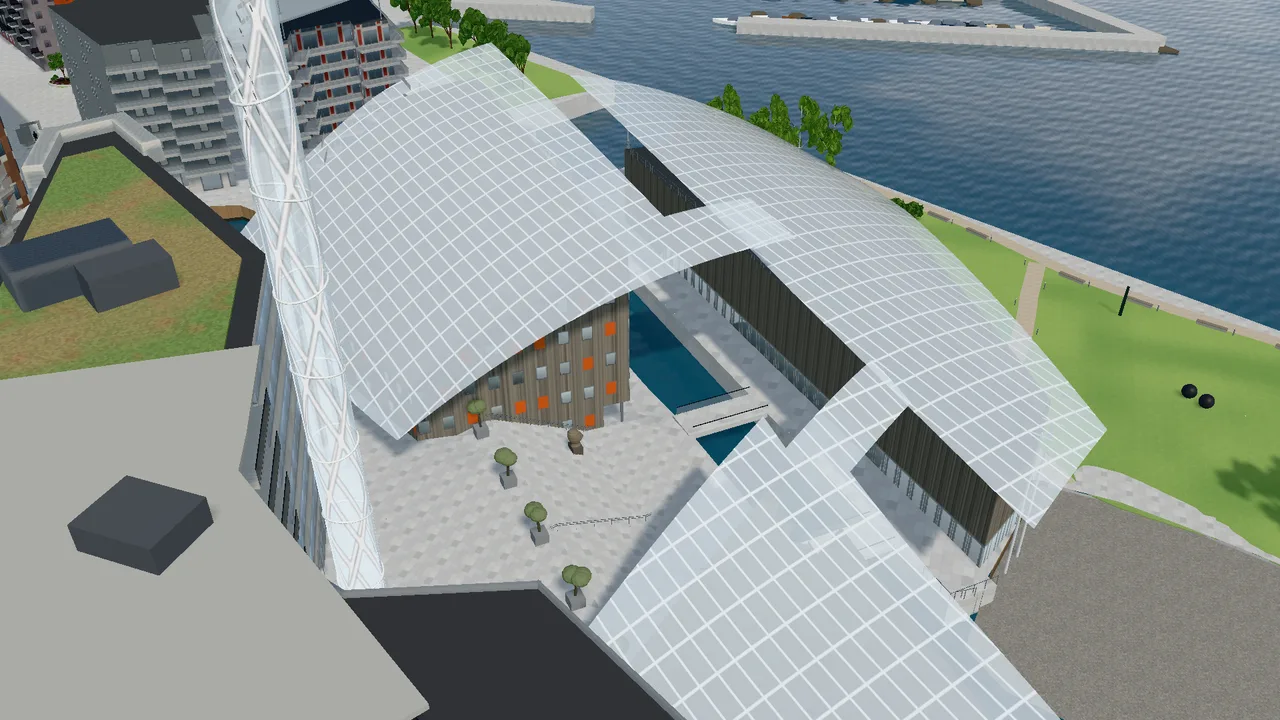
Contemporary art by the fjord, with works by Louise Bourgeois, Anish Kapoor, Paul McCarthy and Franz West.
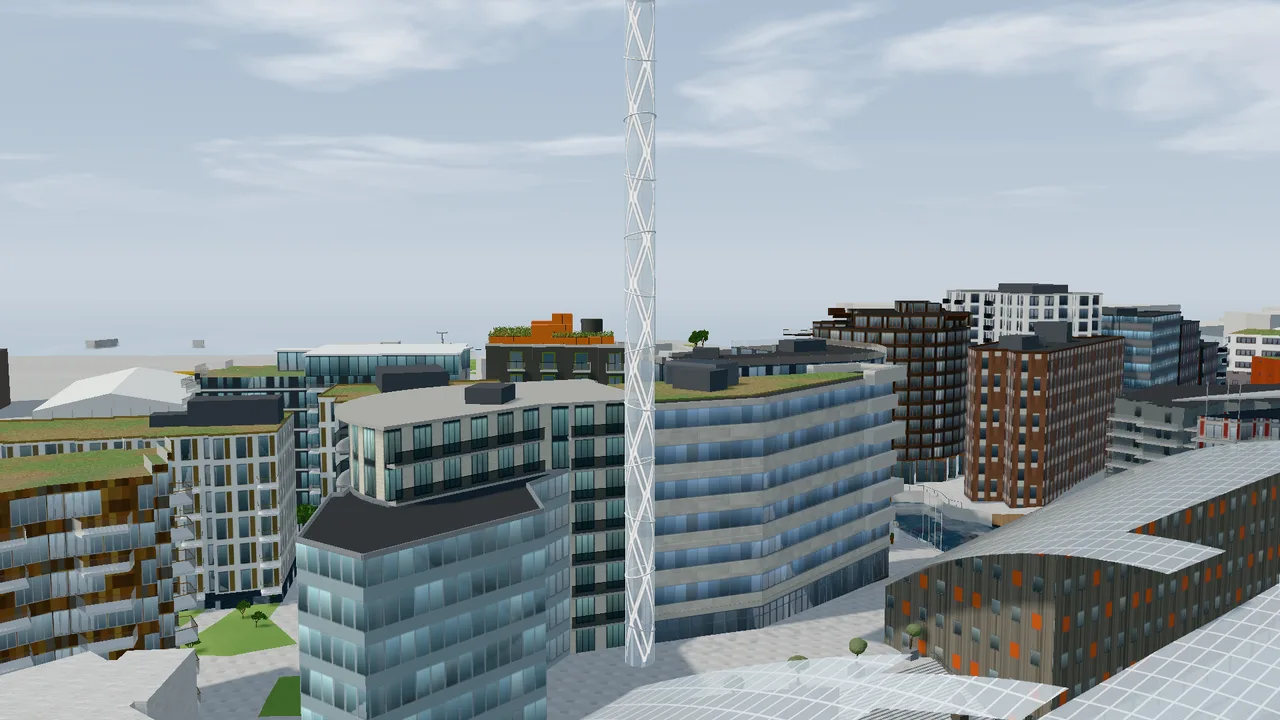
The slender glass-and-steel lookout tower on Albert Nordengens plass, lit in changing colours.
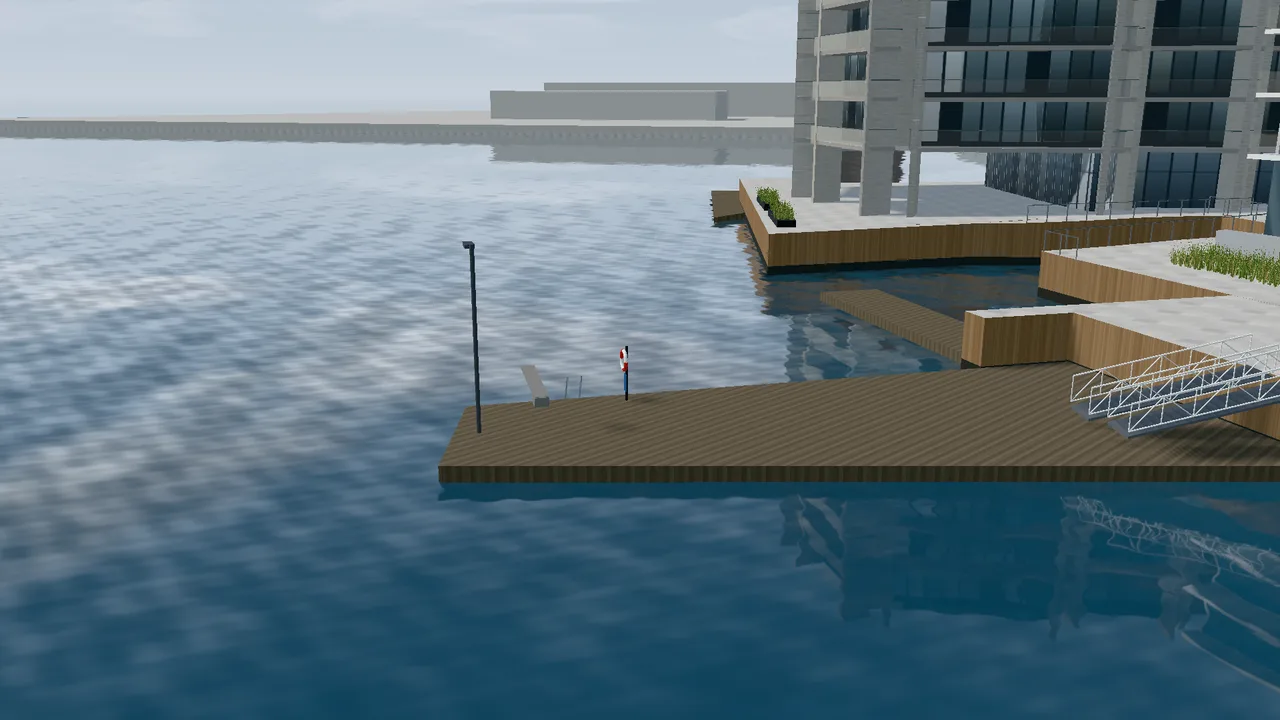
A saltwater bathing spot in the middle of Oslo, with a jetty, a diving board and a pebble beach. People swim here all year round.
Sources: Astrup Fearnley Museet – the museum building · Kongehuset (the Royal House) – Astrup Fearnley Museet opened · KUNSTforum – New Astrup Fearnley Museet opened · Renzo Piano Building Workshop – Astrup Fearnley Museum · Architecture Norway – Tjuvholmen Icon Complex · Wikipedia (Norwegian) – Tjuvholmen skulpturpark · Wikipedia (Norwegian) – Tjuvholmen